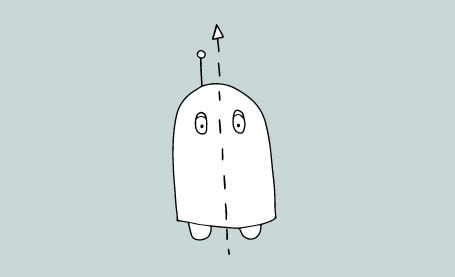
Ready
Communicating robot state | Atomic | Facial Expression | Posture
Find similiar patterns:
Preamble
Type
Atomic Pattern, Communicating robot state
Ranking
* (tentative)
Version
1
Author
Kathrin Pollmann (kathrin.pollmann@iao.fraunhofer.de)
Design Challenge
Interaction Situation
Robot and user are not engaged in a particular interaction. In this situation, it is important that – despite the temporary inactivity of the robot – the user is still made aware that it is ready for interaction and could initiate an action any second. Thus, on the one hand, the user is not startled by the upcoming action of the robot. On the other hand, the user knows that they can expect the robot to react as soon as they initiate an interaction themselves.
Communication
Goal
“I can start acting straight away.”
Design Solution
Solution
Readiness for action can be expressed through an open, upright posture. The head is facing forwards, the torso is straightened up. This impression can be emphasized by not covering the eyes / camera to indicate that robot is actively recording the user and surroundings – a requirement for it to start acting on its own.
Rationale
People that are ready for (inter-)actions usually take an upright position, maintaining body tension as an expression for their capability to react right away, if possible. Such postures are, for example, taken by flight assistants or other service staff when waiting for someone to come up to them with a request. In robotic design, many robots have an upright, rigid body per default. With more flexible robot forms, an upright position can be made more explicit: To give an example. the robot Baymax inflates itself, in order to indicate readiness.

References and
Context
Is needed by: Active, Becoming active, Becoming inactive
Is opposed to: Inside turn, Passively available