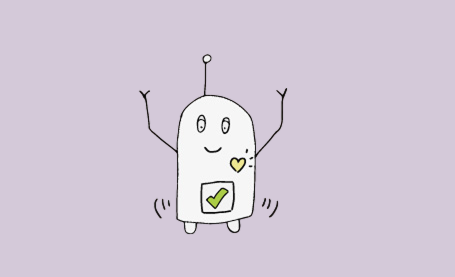
Let the robot express that:
It directs its attention towards the user using a user-oriented positioning in the room, letting robot and user face each other (Attentive).The outcome of the user’s action was evaluated as positive using an affirmative light, sound or gesture (Indication of correctness). It is experiencing happiness by letting it show a gesture or facial expression of joy (Happy).Its operation mode is <on>, setting the status light to permanently glowing (Operation mode on).
Providing positive feedback in a joyful way requires three sub-actions: facing the interaction partner to signal that your attention is focused on them and providing an indication of positive output, paired with an expression of happiness to add an emotional connotation. While humans express approval and correctness mainly through verbal output, gestures and mimics, robots can use other modalities that are commonly known from technical devices, such as a green light or ascending sound. Similarly, positive emotion can be expressed through gestures and mimics, but also by using movement (fast, rhythmic or rotations), light or sound. However, it is advised not to use the same modality for different sub-actions of one Composed Pattern (e.g. sound and light only for Indication of Correctness, not Happy). Further details about the three sub-actions can be found in the descriptions of the Atomic Patterns “Attentive, “indication of Correctness” and “Happy”.